


Water and pets are the two things most likely to damage a hardwood floor — and the two situations where homeowners most often assume the worst. The good news: hardwood is repairable far more often than people expect. The key is matching the fix to the damage. Here's how the three options break down.
First, read the damage
Water damage shows up as:
- Cupping — boards higher at the edges than the center, from moisture underneath
- Crowning — the opposite, higher in the middle
- Dark staining or white cloudy patches in the finish
- Buckling — boards lifting off the subfloor (the most severe)
Pet damage usually means:
- Surface scratches from nails
- Dark black or gray stains where urine has penetrated the wood and reacted over time
- Lingering odor in worst cases, where it's reached the subfloor
Option 1 — Repair (spot fix + blend)
When the damage is contained — a few cupped or stained boards, a damaged area near a door or appliance — we replace the affected boards and blend the repair into the surrounding floor. Matching species, board width, and stain so the fix disappears is the craft here; a good repair is one you can't find afterward. This is the most economical path when damage is localized.
Option 2 — Refinish (when it's surface-level or widespread but shallow)
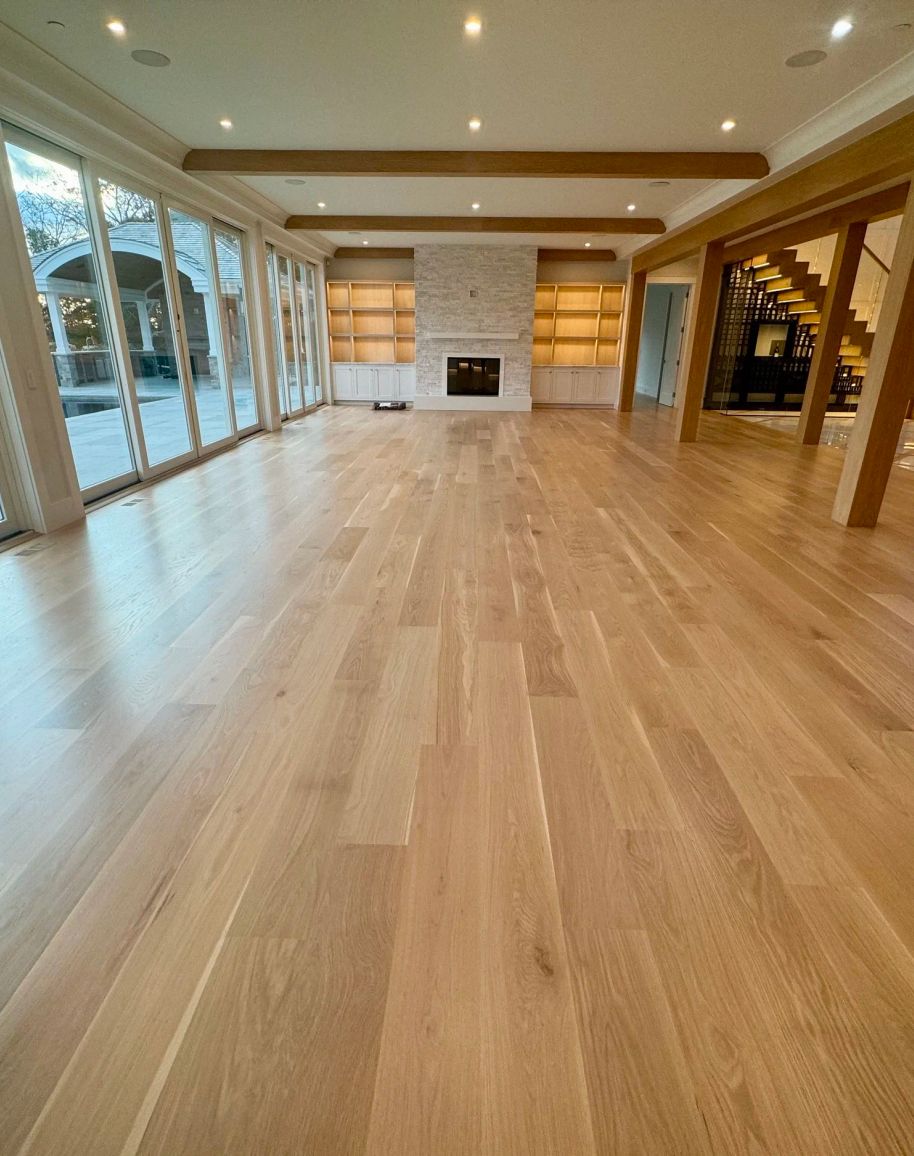
If the problem is largely in the finish — surface scratches, light water staining that hasn't reached deep, mild cupping that has dried and flattened — a full sand-and-refinish often resolves it. Sanding back to bare wood removes surface stains and scratches and resets the floor. We use dustless sanding (up to 99% dust containment), so even a whole-floor refinish stays livable. Many "ruined" floors are simply floors that needed one good refinish.
Important caveat on pet stains: if a black urine stain has penetrated deep into the grain, sanding alone may not fully remove it — those boards usually need replacing, then the floor refinished as one.
Option 3 — Replace (when the wood or subfloor is compromised)
Replacement or full restoration is the answer when:
- Boards are buckled, rotted, or structurally failing
- Mold or odor has reached the subfloor
- Damage covers a large area and the floor has already been refinished as far as it can go
Even then, it's often a section replacement blended into the existing floor, not a full tear-out — we'll always scope the smallest fix that actually solves the problem.
What to do right now if it's fresh water damage
- Stop the water source and dry the area as much as you can.
- Don't rush to rip up boards — hardwood that looks cupped often flattens significantly as it dries over days or weeks.
- Send us photos. We'll tell you whether to wait, repair, or refinish — and we won't recommend replacement if a repair will do.
Lotus Wood Flooring — family-owned, Google Guaranteed, Trumbull-based, serving Fairfield County with 132 five-star reviews. Licensed CT contractor (HIC.0666719).
Dealing with water or pet damage? Send photos for a same-day assessment — we'll tell you the smallest fix that actually works.